
Volcanoes Active and Extinct


A volcano is an opening, or rupture, in a planet's surface or crust, which allows hot, molten rock, ash, and gases to escape from below the surface. Volcanic activity involving the extrusion of rock tends to form mountains or features like mountains over a period of time.

Volcanoes are generally found where tectonic plates are diverging or converging. A mid-oceanic ridge, for example the Mid-Atlantic Ridge, has examples of volcanoes caused by divergent tectonic plates pulling apart; the Pacific Ring of Fire has examples of volcanoes caused by convergent tectonic plates coming together. By contrast, volcanoes are usually not created where two tectonic plates slide past one another. Volcanoes can also form where there is stretching and thinning of the Earth's crust (called "non-hotspot intraplate volcanism"), such as in the African Rift Valley, the Wells Gray-Clearwater volcanic field and the Rio Grande Rift in North America and the European Rhine Graben with its Eifel volcanoes.

The most common perception of a volcano is of a conical mountain (therefore all volcano national parks are simultaneously listed in mountains national parks), spewing lava and poisonous gases from a crater at its summit. This describes just one of many types of volcano, and the features of volcanoes are much more complicated. The structure and behavior of volcanoes depends on a number of factors. Some volcanoes have rugged peaks formed by lava domes rather than a summit crater, whereas others present landscape features such as massive plateaus. Vents that issue volcanic material (lava, which is what magma is called once it has escaped to the surface, and ash) and gases (mainly steam and magmatic gases) can be located anywhere on the landform. Many of these vents give rise to smaller cones.Sopka

Active

A popular way of classifying magmatic volcanoes is by their frequency of eruption, with those that erupt regularly called active, those that have erupted in historical times but are now quiet called dormant, and those that have not erupted in historical times called extinct. However, these popular classifications—extinct in particular—are practically meaningless to scientists. They use classifications which refer to a particular volcano's formative and eruptive processes and resulting shapes, which was explained above.

Scientists usually consider a volcano to be active if it is currently erupting or showing signs of unrest, such as unusual earthquake activity or significant new gas emissions. Many scientists also consider a volcano active if it has erupted in historic time. It is important to note that the span of recorded history differs from region to region; in the Mediterranean, recorded history reaches back more than 3,000 years but in the Pacific Northwest of the United States and Canada, it reaches back less than 300 years, and in Hawaii and New Zealand, only around 200 years. The Smithsonian Global Volcanism Program's definition of active is having erupted within the last 10,000 years.

Extinct

Extinct volcanoes are those that scientists consider unlikely to erupt again, because the volcano no longer has a lava supply. Examples of extinct volcanoes are many volcanoes on the Hawaiian Islands in the U.S. (extinct because the Hawaii hotspot is centered near the Big Island), and Paricutin, which is monogenetic. Otherwise, whether a volcano is truly extinct is often difficult to determine. Since "supervolcano" calderas can have eruptive lifespans sometimes measured in millions of years, a caldera that has not produced an eruption in tens of thousands of years is likely to be considered dormant instead of extinct. For example, the Yellowstone Caldera in Yellowstone National Park is at least 2 million years old and hasn't erupted violently for approximately 640,000 years, although there has been some minor activity relatively recently, with hydrothermal eruptions less than 10,000 years ago and lava flows about 70,000 years ago. For this reason, scientists do not consider the Yellowstone Caldera extinct. In fact, because the caldera has frequent earthquakes, a very active geothermal system (i.e. the entirety of the geothermal activity found in Yellowstone National Park), and rapid rates of ground uplift, many scientists consider it to be an active volcano.

It is difficult to distinguish an extinct volcano from a dormant one because volcanoes are usually considered to be extinct if there are no written records of its activity. Nevertheless volcanoes may remain dormant for a long period of time and it is not uncommon for a so-called "extinct" volcano to erupt again. Vesuvius was thought to be extinct before its famous eruption of AD 79, which destroyed the towns of Herculaneum and Pompeii. More recently, the long-dormant Soufrière Hills volcano on the island of Montserrat was thought to be extinct before activity resumed in 1995. The most recent example is Fourpeaked Mountain in Alaska, which prior to September 2006 is not believed to have erupted since before 8000 BCE and was long thought to be extinct.

Lava flows are degradated by weather factors very fast.  The soil originated this way is extermely fertile. Therefore volcanoes are usually rapidly settled by plants and animals in a few years after eruption. All ecosystems are distributed on volcano slopes the same way like on other mountains in the same region.

Albatros Travel and Expeditions can provide you many trips directed into areas of active or extinct volcanoes. These trips are usually easy or moderate, some treks can be even difficult. Even not specially trained  people can take part in many of such journeys. There is a list of countries where volcanic national parks can be visited:

Indonesia - almost on all larger islands.

More information

New Zealand - two national parks in New Zealand´s North Island

More information

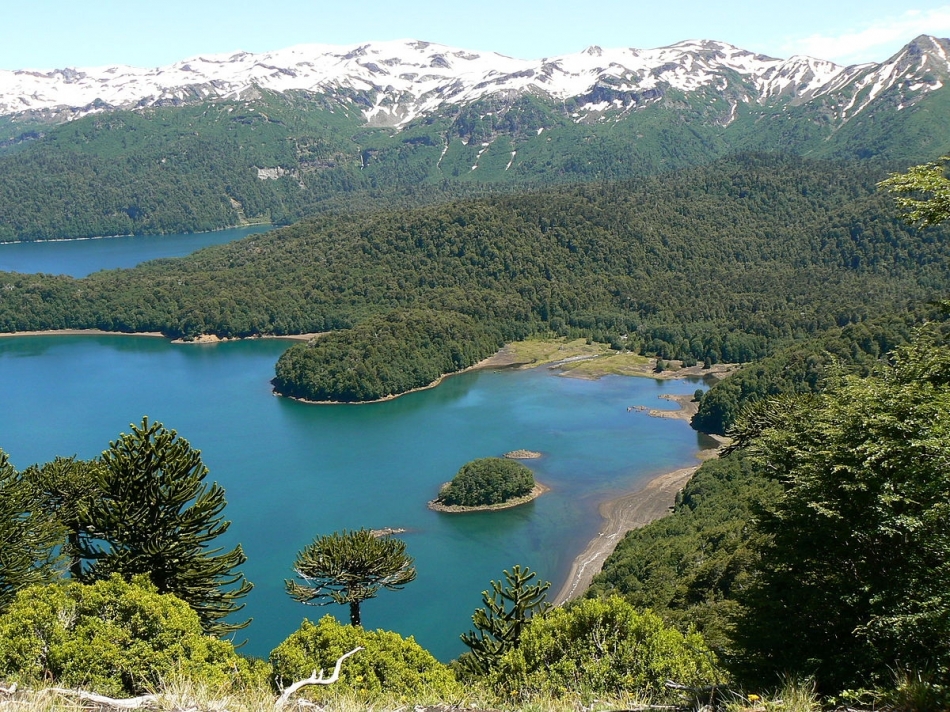
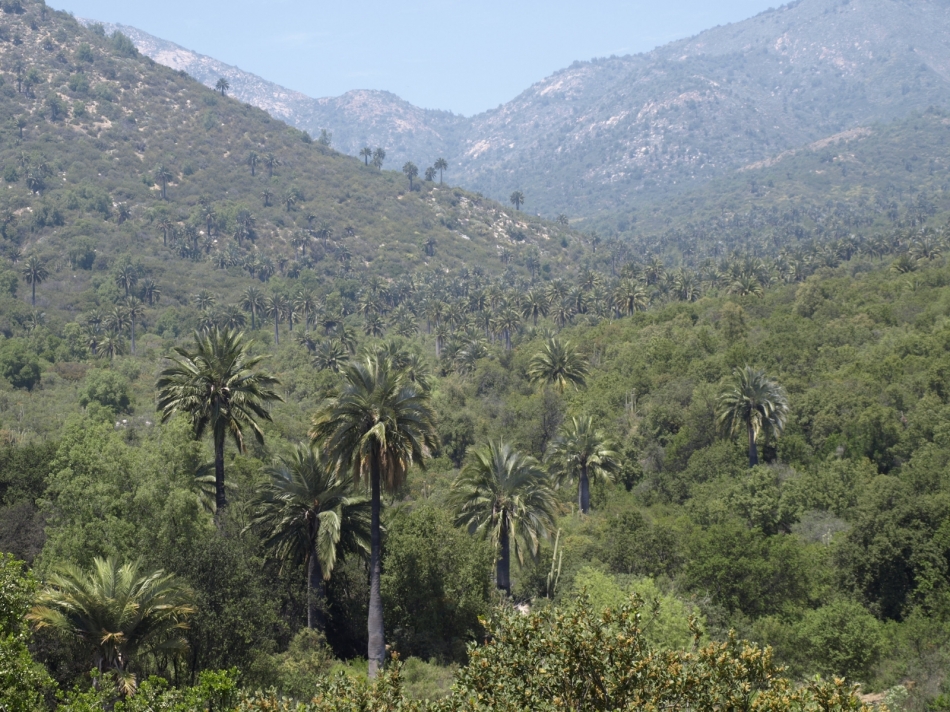
Chile - scattered in mountain ranges in all territory

More information

Ecuador - national parks within Andes and in Galapagos

More information