

Marine and Coastal Ecosystems


Sea coast is probably the most attractive place for inland people to relax. We intend to inroduce sea coast and adjacent marine ecosystems as extraordinary interesting ecosystems offering lot of space for active relaxation and ecological education.

Marine ecosystems cover approximately 71% of the Earth's surface and contain approximately 97% of the planet's water. They generate 32% of the world's net primary production. They are distinguished from freshwater ecosystems by the presence of dissolved compounds, especially salts, in the water. Approximately 85% of the dissolved materials in seawater are sodium and chlorine. Seawater has an average salinity of 35 parts per thousand (ppt) of water. Actual salinity varies among different marine ecosystems.Mořské pobřeží

Marine ecosystems can be divided into the following zones: oceanic (the relatively shallow part of the ocean that lies over the continental shelf); profundal (bottom or deep water); benthic (bottom substrates); intertidal (the area between high and low tides); estuaries; salt marshes; coral reefs; and hydrothermal vents (where chemosynthetic sulfur bacteria form the food base).

Classes of organisms found in marine ecosystems include brown algae, dinoflagellates, corals, cephalopods, echinoderms, and sharks. Fish caught in marine ecosystems are the biggest source of commercial foods obtained from wild populations.

Environmental problems concerning marine ecosystems include unsustainable exploitation of marine resources (for example overfishing of certain species), water pollution, and building on coastal areas.

In coastal ecosystems, the littoral zone extends from the high water mark, which is rarely inundated, to shoreline areas that are permanently submerged. It always includes the intertidal zone and is often used to mean the same as the intertidal zone. However, the meaning of "littoral zone" can extend well beyond the intertidal zone.

The intertidal zone (also known as the foreshore, and sometimes referred to as the littoral zone) is the area that is exposed to the air at low tide and submerged at high tide, for example, the area between tide marks. This area can include many different types of habitats, including steep rocky cliffs, sandy beaches, sand dunes or wetlands (e.g., vast mudflats). The area can be a narrow strip, as in Pacific islands that have only a narrow tidal range, or can include many meters of shoreline where shallow beach slope interacts with high tidal excursion.

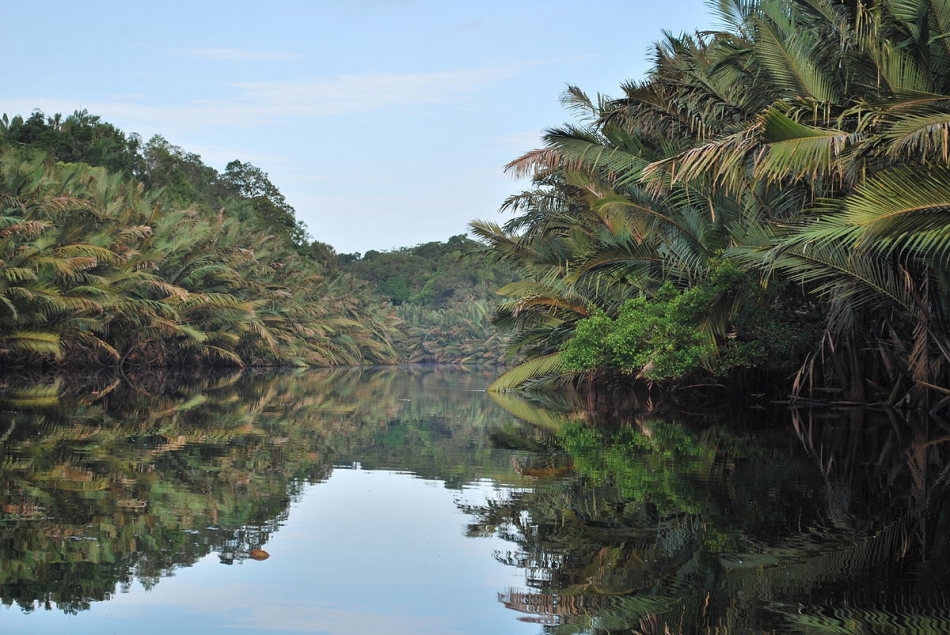
Organisms in the intertidal zone are adapted to an environment of harsh extremes. Water is available regularly with the tides but varies from fresh with rain to highly saline and dry salt with drying between tidal inundations. The action of waves can dislodge residents in the littoral zone. With the intertidal zone's high exposure to the sun the temperature range can be anything from very hot with full sun to near freezing in colder climates. Some microclimates in the littoral zone are ameliorated by local features and larger plants such as mangroves . Adaption in the littoral zone is for making use of nutrients supplied in high volume on a regular basis from the sea which is actively moved to the zone by tides. Edges of habitats, in this case land and sea, are themselves often significant ecologies, and the littoral zone is a prime example.

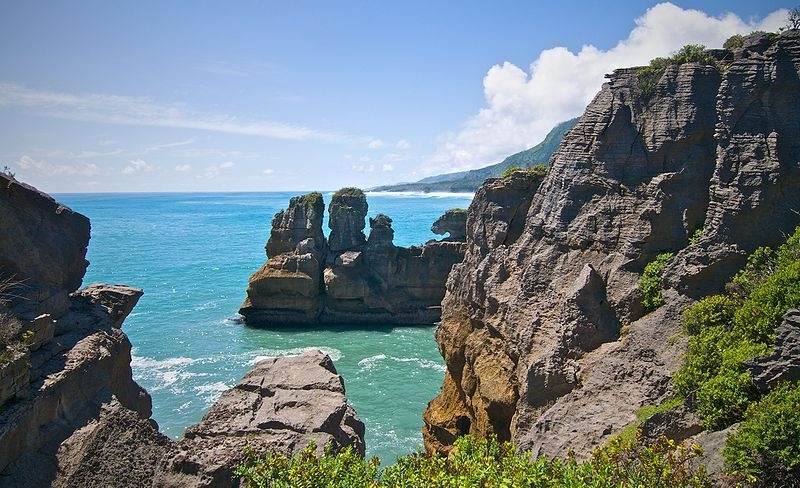
A typical rocky shore can be divided into a spray zone or splash zone (also known as the supratidal zone), which is above the spring high-tide line and is covered by water only during storms, and an intertidal zone, which lies between the high and low tidal extremes. Along most shores, the intertidal zone can be clearly separated into the following subzones: high tide zone, middle tide zone, and low tide zone.

The neritic zone, also called the sublittoral zone, is the part of the ocean extending from the low tide mark to the edge of the continental shelf, with a relatively shallow depth extending to about 200 meters (100 fathoms). The neritic zone has generally well-oxygenated water, low water pressure, and relatively stable temperature and salinity levels. These, combined with presence of light and the resulting photosynthetic life, such as phytoplankton and floating sargassum, make the neritic zone the location of the majority of sea life.

Zooplankton, free-floating creatures ranging from microscopic foraminiferans to small fish and shrimp, live in this zone, and together with the phytoplankton form the base of the food pyramid that supports most of the world's great fishing areas.

At the edge of the neritic zone the continental shelves end, rapidly descending to the deeper oceanic crust and the pelagic zone.

The continental shelf is the extended perimeter of each continent and associated coastal plain, and was part of the continent during the glacial periods, but is undersea during interglacial periods such as the current epoch by relatively shallow seas (known as shelf seas) and gulfs.

The pelagic zone occupies 1,370 million cubic kilometres (330 million cubic miles) and has a vertical range up to 11 kilometres (6.8 miles). Fish that live in the pelagic zone are called pelagic fish. Pelagic life decreases with increasing depth. It is affected by light levels, pressure, temperature, salinity, the supply of dissolved oxygen and nutrients, and the submarine topography.

In deep water the pelagic zone is sometimes called the open-ocean zone and can be contrasted with water that is near the coast or on the continental shelf. However in other contexts, coastal water that is not near the bottom is still said to be in the pelagic zone.

The benthic zone is the ecological region at the lowest level of a body of water such as an ocean or a lake, including the sediment surface and some sub-surface layers. Organisms living in this zone are called benthos. They generally live in close relationship with the substrate bottom; many such organisms are permanently attached to the bottom. The superficial layer of the soil lining the given body of water is an integral part of the benthic zone, as it influences greatly the biological activity which takes place there. Examples of contact soil layers include sand bottoms, rock outcrops, coral, and bay mud.

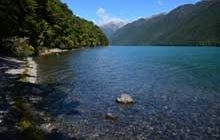
The coast is defined as that part of the land adjoining or near the ocean or its saltwater arms. A precise line that can be called a coastline cannot be determined due to the process of tides. The term "coastal zone" can be used instead, which is a spatial zone where interaction of the sea and land processes occurs.

A pelagic coast refers to a coast which fronts the open ocean, as opposed to a more sheltered coast in a gulf or bay. A shore, on the other hand, can refer to parts of the land which adjoin any large body of water, including oceans (sea shore) and lakes (lake shore).

Albatros Travel and Expeditions can provide you many trips directed into areas with remarkable marine ecosystems or sea coast worldwide. These trips are usually easy. Even not trained  people can take part in such journeys. There is a list of countries where these ecosystems can be visited:

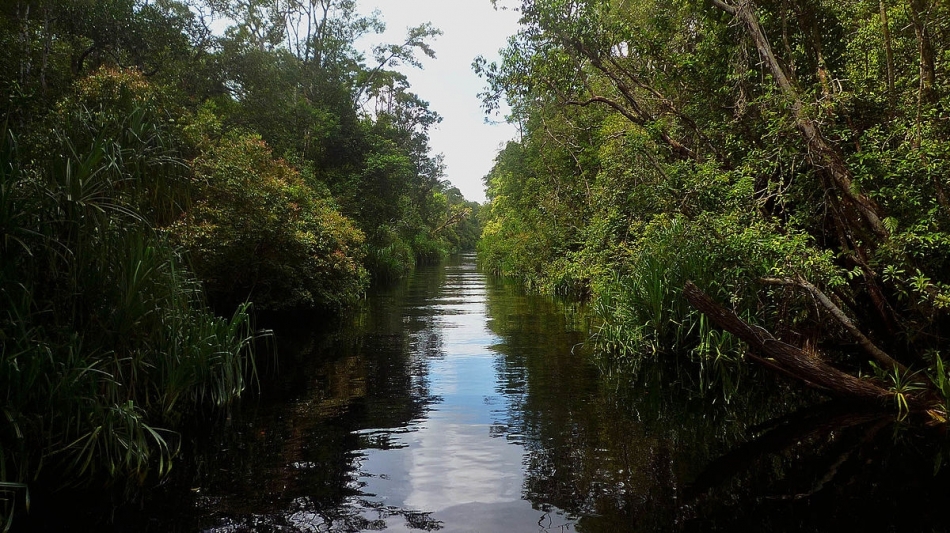
Indonesia - many national parks on the coast of almost all bigger islands

more information

 Sri Lanka - northwest  and southeast coasts

more information

Tanzania - four parks on the eastern coast

more information

New Zealand - coastal national parks of all main islands

more information

Chile - coastal parks and oceanic islands mostly in the south

more information 

Ecuador - two national park in the west + Galapagos

more information